Know what is happening before choosing the work
A useful roof inspection is more than a quick look from the driveway. Roofing materials, transitions, penetrations, drainage and attic conditions can each provide clues about current performance. The purpose is to connect those observations into a practical explanation.
OCT Roofing listens to what you have noticed, reviews accessible areas related to the concern and explains visible findings in plain language. The assessment helps determine whether the roof appears serviceable, needs focused repair or warrants a replacement conversation.
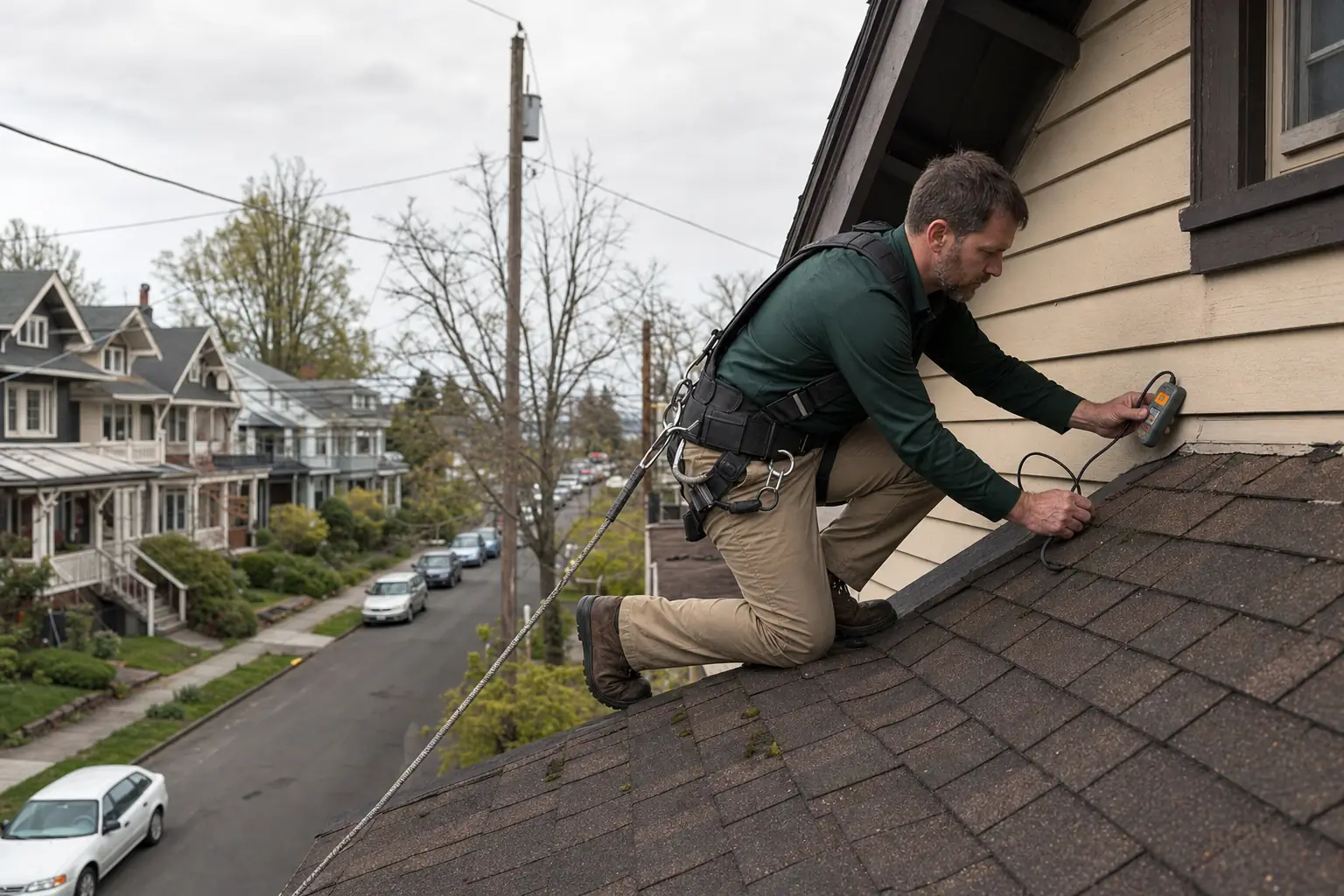
What we evaluate
- Visible condition of shingles or other primary roofing materials
- Valleys, sidewalls, roof edges and other water-shedding transitions
- Flashing around vents and accessible penetrations
- Gutter edges and obvious drainage concerns
- Signs of storm, branch or debris damage
- Accessible attic indicators when interior access is part of the appointment
- Visible ventilation and moisture-management concerns
When to request a roof inspection
Schedule an assessment when you notice ceiling stains, missing shingles, storm debris, unusual granules in gutters, recurring moss, sagging areas or an unexplained change in the roof’s appearance. An inspection is also useful when you are planning future home improvements and need to understand the roof’s likely remaining condition.
Inspection findings and next steps
Roof assessments have limits because some components remain concealed until materials are removed. We distinguish between visible observations and conditions that may require further investigation. If work is recommended, we explain why, identify the relevant area and outline the next step.
You will not be pushed toward replacement simply because you requested an inspection. If maintenance or repair is the reasonable option, that is the conversation we have.
Local knowledge for Oregon roofs
Oregon City’s tree cover and long wet season can keep roof surfaces damp and concentrate debris in valleys and gutters. An inspection should consider not only what is damaged today, but also the drainage and moisture conditions that could shorten the roof’s useful life.